Vaporesso Luxe XR: keeping a hardware log
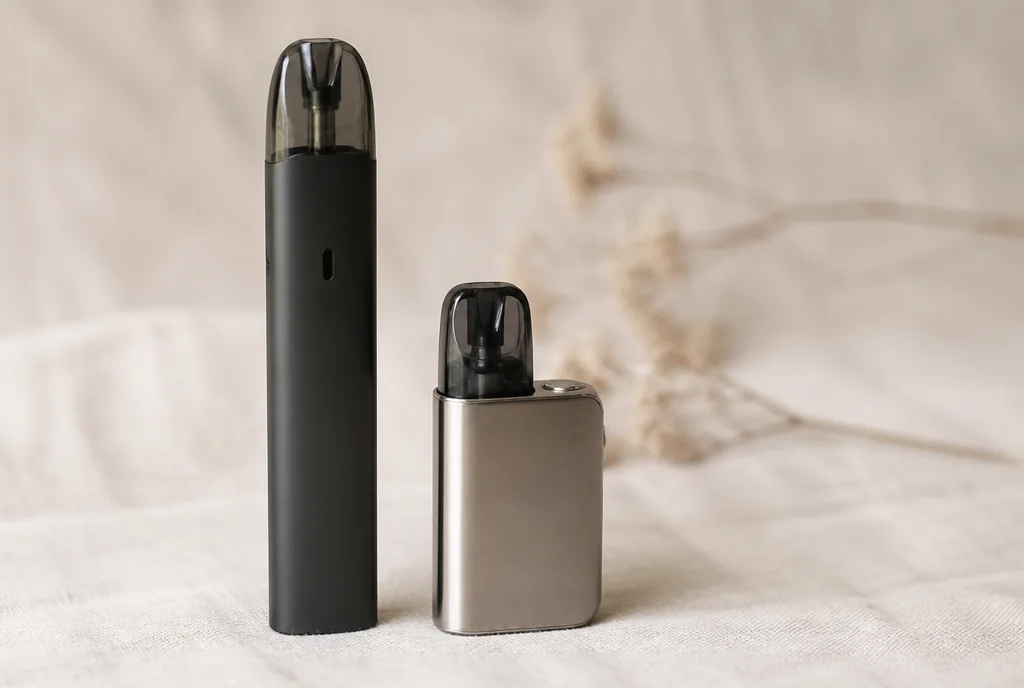
A pod kit does not fail overnight, it drifts. Vapour drops off, flavour flattens, battery life shortens, and all of it gets blamed on the liquid. A tracking sheet kept from day one settles that question in three seconds. The vaporesso luxe xr lends itself well to the exercise, because its components are interchangeable and can therefore be traced separately.
What a pod tracking sheet has to hold
Four blocks, and not one more. The exact identity of the device, the list of consumables with their fitting dates, a simple counter, and an incident column.
Identity is filled in once. Consumables are filled in at every change. The counter is filled in as you go. The incident column is only filled in when something happens, and it is the one carrying the most value on re-reading.
A hardware sheet does not need tasting notes. Keep those in the flavour notebook with a plain cross reference. Mixing the two makes both illegible, and the fix later is far more work than the discipline now.
Vaporesso Luxe XR: pinning down the generation
This is where almost every personal sheet fails, because the range carries very close names and shop listings do not help.
The original kit is quoted with a fifteen hundred milliamp hour battery and a power range running to forty watts, charging over Type-C. The display is limited to three indicator lights, with no screen, and the box holds two cartridges, one for restricted direct lung and one for mouth to lung, plus two GTX coils in the common nought point four and nought point eight ohm values.
One British specific has to be on your sheet. Pods and cartridges sold in the United Kingdom are capped at two millilitres of capacity, whatever the figure quoted in the maker’s international documentation. If your baseline refill count came from a listing written for another market, every counter below it is wrong.
There is also a naming trap worth recording. On the maker’s own kit page, the battery listed in the box contents is named Luxe X, without the R, while the kit itself is sold as Luxe XR. That kind of discrepancy is enough to create two entries for a single device in a notebook.
The defence is simple. Write the kit name as it appears on the box, then the name engraved on the battery itself. Two fields, and the doubt disappears permanently.
Later variants deepen the confusion. British stockists list Max and Max 2 versions with different specifications: shop pages quote twenty eight hundred milliamp hours for the Max and thirty two hundred for the Max 2, both running to eighty watts, with a screen. On a tracking sheet that distinction is not a detail, because your expected battery life and your reference power range depend entirely on it.
The fields of the hardware sheet
Here is the structure worth using for a pod with interchangeable cartridges and coils. It fits on one page and takes a few seconds per entry.
The identity block holds the kit name, the name engraved on the battery, the generation, the purchase date, the date it entered service, and the retailer. The service date matters more than the purchase date: a device left in a drawer for three months has not lived the same life as one used immediately.
Add the quoted battery capacity and the power range. Those are your reference values, the ones you will compare against later when you suspect something has slipped.
The consumables block holds one line per cartridge and one per coil. For each line: type, value in ohms, fitting date, removal date, reason for removal.
The reason is the decisive field. Burnt flavour, drop in vapour, leak, preventive replacement: four reasons are enough, and how they distribute across six months tells the real story of your usage.
The counter block holds three light counters. Number of refills since the last coil change, approximate number of charges, and the wattage you habitually use.
The refill count is a far better wear indicator than the number of days. Two people using the same vaporesso luxe xr can be three to one apart on that counter over an identical period, and with a two millilitre cartridge the count climbs quickly.
The incident block holds a date, a one line description, the action taken and the result. An isolated leak after a journey has nothing to do with a recurring one, and only the sheet lets you tell them apart.
How often to read the sheet back
A sheet is read at specific moments, otherwise it becomes a diary nobody opens.
Read it at every coil change. That is the natural moment: you record the removal, you see the elapsed duration, you compare it with the previous one. A lifespan that shortens steadily is a signal, not bad luck.
Read it again at the end of each quarter, looking only at the column of removal reasons. If burnt flavour dominates, the problem sits with your settings or your liquid. If leaks dominate, it sits with the cartridge or with handling.
Read it finally before buying any replacement. Six months of sheet will tell you whether the pod you are about to replace genuinely underperformed, or whether you simply changed liquid along the way. The same traceability logic applies to the liquids, particularly when a cold profile evolves across the life of a coil.
The baseline figures to record on day one
Three values taken when the kit is opened will serve as references for the whole life of the device, and none of them can be recovered afterwards.
The first is the number of refills obtained on the first coil under normal conditions. That becomes your personal yardstick, and on a two millilitre cartridge it is a large enough number to be meaningful.
The second is how long a full charge lasts in your real usage, in days or half days. The figure quoted by the maker describes theoretical use, yours describes the only one that counts.
The third is the wattage you settle on for each coil value. The kit offers a wide range, but in practice everyone fixes on one point. Recording it saves starting from scratch with every new cartridge.
Frequently asked questions
The practical questions raised by keeping a hardware sheet once the structure is in place.
One sheet per device or one per cartridge?
One per device, with lines for the cartridges. Cartridges get replaced, the device is the thread running through the whole record.
Paper or spreadsheet?
Paper wins on consistency, the spreadsheet on re-reading. An effective compromise is to write on paper next to the hardware, then transfer once a month.
What do you record when several liquids run on one coil?
The list of liquids and the order they ran in. A sweet liquid passed through mid coil changes everything after it, and without that line the wear looks inexplicable.
How long do you keep a sheet after selling the device?
At least until the replacement has a quarter behind it. That is the only way to compare two generations objectively.
Does the sheet help with a claim to the retailer?
It documents the dates and the nature of the incidents, which helps describe a problem precisely. The applicable warranty terms remain those of the seller and the manufacturer.
What a Vaporesso Luxe XR tracking sheet changes
Keeping a sheet on a vaporesso luxe xr takes no more than two minutes a week. What it gives you is the end of guesswork: you know whether the drop comes from the coil, the cartridge, the liquid or the device itself.
Start with the identity and consumables blocks, and add the counters once the habit has settled. A hardware notebook is built in layers, never in one go, and the same layered approach works just as well on a weekly liquid logbook.
Editorial content for adult readers only. Vaping products usually contain nicotine, a substance that causes addiction. Not for sale to under-18s in the United Kingdom. This article is not a buying recommendation.