Blue razzberry: scoring a flavour with no fruit

Describing a raspberry is easy, because you compare it to a raspberry. Describing a blue razzberry is much harder, because there is no fruit to hold it against. The usual tasting vocabulary collapses, and notebooks fill up with vague phrases nobody can read back six months later. What this profile needs is a different grid, built on what the flavour actually is rather than on an imaginary berry.
What a blue razzberry entry has to measure
Three things, in this order. The sour edge, the sweetness, and the perceived distance from a real raspberry. Everything else, coolness included, comes afterwards.
A scale of one to five is enough for each axis. Add one free field for a comparison, along the lines of closer to a sour sweet shop confection or closer to fresh fruit. That single field is what will make the entry readable again in six months.
Never score this profile first in a session. Its aromatic signature is loud, and it distorts your reading of the next two or three liquids for several minutes afterwards.
Blue razz, blue raspberry, blue razzberry: what the label tells you
The name travels between spellings and between whole product categories. In British shops the shelf label is usually blue raspberry, while bar style ranges and disposable inspired liquids tend to shorten it to blue razz. Understanding where the flavour comes from changes how you score it, because there is no natural reference to summon.
The flavour is manufactured, not picked. It was built from esters that also appear in the aromatic profile of pineapple, banana and cherry, which is why chasing raspberry in the mouth leads nowhere useful. If you look for raspberry, you record a gap. If you look for a pineapple, banana and cherry accord, you record a composition.
The colour arrived before the taste. The blue tint originally served to separate raspberry flavoured products from cherry, watermelon and strawberry ones, all of which were red. That history explains why the profile reads as a confection rather than as fruit, and it is worth a line in your notebook the first time you open a bottle.
The double z spelling is a commercial variant, not a separate flavour family. It turns up on products with nothing in common, soft drinks included. On your card, copy the exact spelling from the label and add the maker, otherwise two entries will eventually merge into one.
The five criteria of the grid
Each axis is scored on its own, one puff at a time. A note taken while chaining inhales blends the perceptions together and loses most of its value.
Sourness on the attack comes first, from one to five. This is the signature of the profile. Record its intensity, then its rough duration in seconds. A short sharp sourness does not read back the same way as a long enveloping one.
Sweetness follows, again from one to five. Sugar is routinely added to this flavour across the whole confectionery category, and in a liquid the sweet sensation stays perfectly legible. Score it, because it predicts wick gunking as much as it predicts palate fatigue.
The distance from a real raspberry is the third criterion, and the most useful one. A score of one means the profile feels close to actual fruit, a five means it has cut loose entirely. That single figure will tell you whether a new bottle is worth buying better than any tasting note.
The supporting note is a free text field. Many recipes do not use the flavour on its own: some pair it with lemonade, others with a mixed berry blend, and British ranges frequently add a cold layer. Write what you perceive before reading the label, then compare the two.
Coolness closes the grid, from zero to three. It is optional on this profile but present in a good share of British recipes. Note above all whether it arrives before or after the sourness, because the order of appearance completely changes how a blue razzberry reads.
Identify the bottle, or the entry is worthless
The same wording covers products of very different formats and bases. An entry without a precise reference becomes unreadable by the third line.
British catalogues carry the flavour as nic salts, as fifty fifty freebase blends and as shortfills, across the whole range of strengths available here. Nicotine containing bottles sold in the United Kingdom are capped at ten millilitres and at twenty milligrams per millilitre, so a large bottle you see on a shelf is a nicotine free shortfill waiting for a shot.
Record four fields every time: brand, range, volume and nicotine strength. Without the volume you will not know whether your note covered a ready to vape bottle or a shortfill you finished yourself, and the final strength changes the throat sensation entirely.
The name also circulates well outside vaping, on nicotine pouches and on soft drinks. Searching the wording alone brings all of that back, which is one more reason for your notebook to carry the brand and the format rather than the flavour name on its own. The same trap catches every generic wording, which is why a fruit name shared by several makers needs the same four fields.
How often to read these notes back
A sour profile ages differently from a round fruity one. It loses sharpness faster than the sweetness fades, which shifts the balance of the recipe week after week.
Plan three readings: one when the bottle is opened, a second after three weeks, a third as the bottle empties. If the gap between the first and the last exceeds two points on sourness, that reference is not one to stockpile.
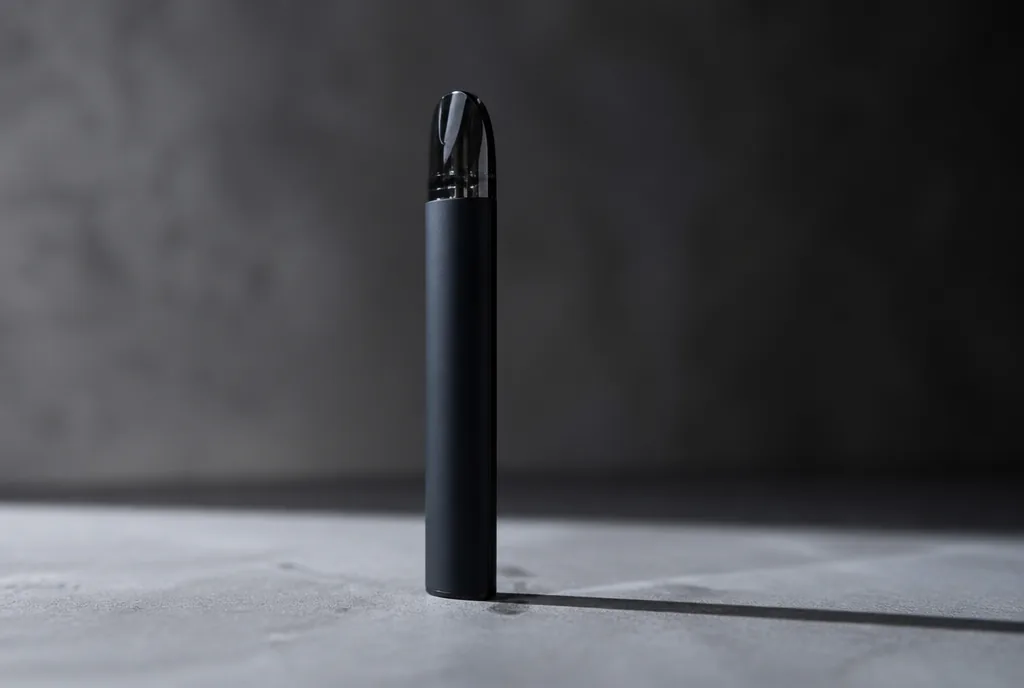
The same drift shows up on the hardware side, not only in the bottle. Spaced out re-reading works exactly the same way when you keep a running card on a pod over several months, and the discipline transfers without changes.
Frequently asked questions
The things the grid does not cover, which come up constantly once you start scoring this kind of profile.
Does the blue colouring end up in an e-liquid?
Nothing allows you to claim that for a given recipe. The blue tint belongs to the history of confectionery and syrups. The composition of a liquid is on its label and its leaflet, and that is the only reference to consult.
Should this profile be scored on a fresh coil or a run in one?
On both, on separate lines. Sharp sourness reads very differently on new cotton, which makes any comparison between two brands unreliable if the coils are not at the same stage.
Can a ten millilitre bottle be compared with a shortfill of the same flavour?
Only if the ratio and the final strength match. Otherwise they are two separate entries in the notebook, with a cross reference from one to the other.
Why does my score change with the power setting?
Because sourness and sugar do not react at the same speed as temperature rises. Record the wattage on every line: it is the single most explanatory parameter for this kind of variation.
What if no word comes to mind for the flavour?
Write a comparison rather than an adjective. Sharper than reference X, less sweet than reference Y. A notebook works perfectly well on gaps, with no specialist vocabulary at all.
Making blue razzberry an entry that holds up
A blue razzberry is not scored like a straightforward fruit, because it has no natural model to be measured against. The grid set out here replaces comparison to a fruit with a measurement of distance, and that makes it far more stable over time.
Try it on two different bottles before judging it. It is the act of comparing two cards filled in with identical criteria that makes a notebook start answering questions on your behalf. Keep the brand, the format and the strength on every line, keep the five axes in the same order, and by the fourth entry the pattern of your own preferences will already be visible.
Editorial content for adult readers only. Vaping products usually contain nicotine, a substance that causes addiction. Not for sale to under-18s in the United Kingdom. This article is not a buying recommendation.